5 Ways Banking Moved Forward in 2025

Beneficial State Foundation
December 11, 2025
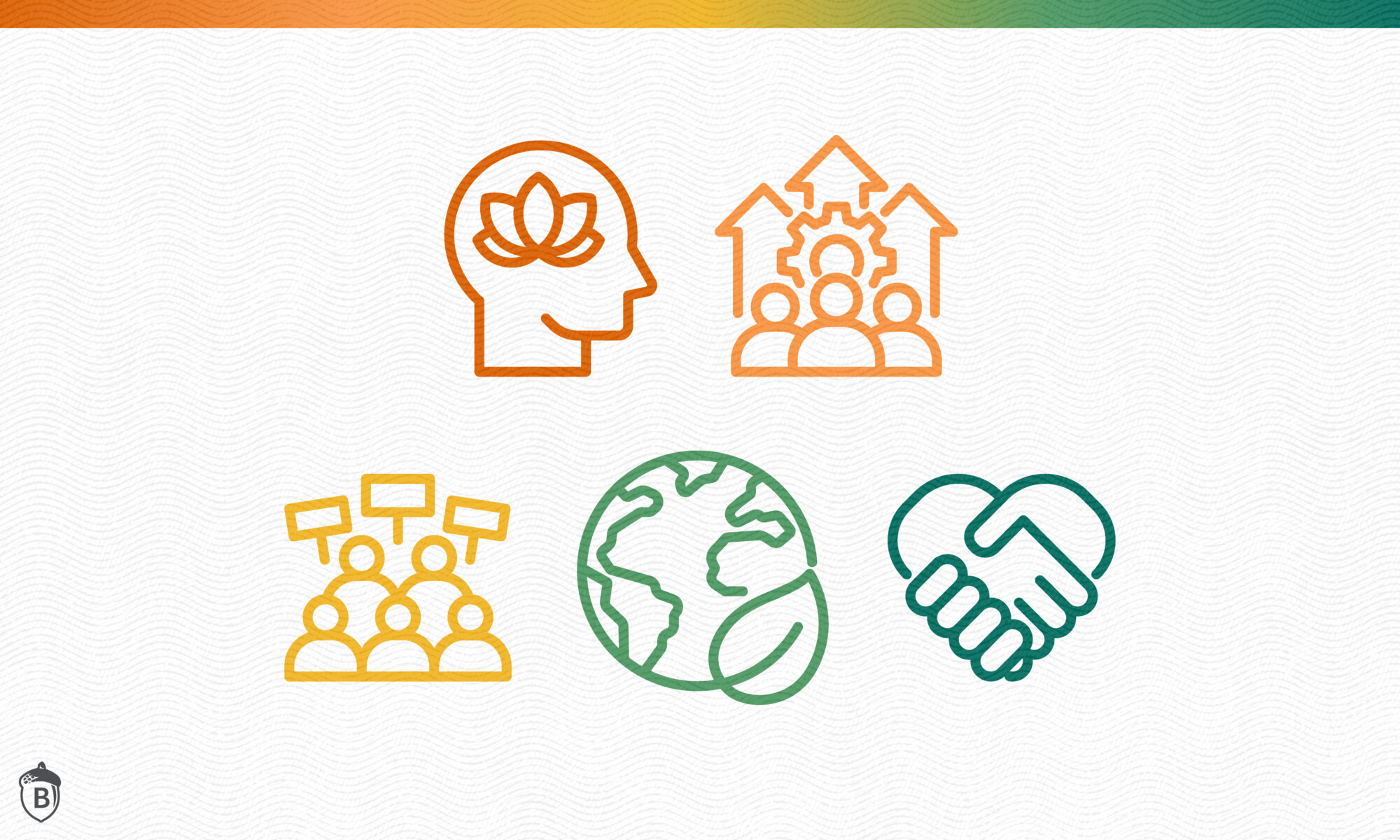
Transforming the banking system isn’t a linear path — and in 2025, there were both setbacks and steps forward. Communities faced regulatory rollbacks, funding cuts, and backlash against values-driven finance. But we also saw financial institutions and advocates lean into fairness, transparency, and repair. Here are five of the year’s high notes that demonstrated how progress is possible:
 1. Bankers expressed high levels of support for community wellbeing.
In an industry generally perceived as primarily driven by profit, the majority of bankers aim to create meaningful community impact. Our own survey results, as well as broader reputation trends, reflected this reality. Financial institutions increasingly recognize how fairness, transparency, and stronger relationships shape long-term trust. And conversations about past harms, including reflections on redlining and its ongoing effects, helped reinforce why true community impact requires confronting the long history of exclusion in banking.
That inclusion extends to bank employees as well, who continued to organize, notably at one of the country’s largest financial institutions. And our Executive Director emphasized the importance of community engagement in a healthy, thriving democracy.
 2. Lenders tested new tools to expand access to credit.
New research on inequities in small business lending underscored the persistence of racial and gender gaps in access to capital. In 2025, lenders deepened their learning through Special Purpose Credit Programs (SPCPs) and hardship-relief tools — including resources that help small businesses pause loan payments during difficult periods — as part of a broader effort to repair long-standing exclusionary practices.
This echoes our conviction that better banking must contribute to Black economic liberation, grounding access-expanding tools in a broader frame of repair and racial justice. Among other industry-leading practices, lenders in our Underwriting for Racial Justice Lender Pilot Program explored how considering borrower context and relationship-based lending strengthens fair decision-making.

3. Advocates mobilized as policy shifts threatened key protections.
Attempts to cut the CDFI Fund prompted a broad mobilization from advocates, including lawmakers from both sides of the aisle, to defend this critical public resource. However, ongoing attacks on the CFPB and continued efforts to weaken or roll back the Community Reinvestment Act make clear that we must double down on collective action to preserve some of our most effective tools for consumer protection and financial inclusion.
In this landscape, mission-driven institutions continue to demonstrate why we need the CFPB. Our Equitable Bank Standards provide a community-grounded path forward for proven banking practices regardless of regulatory fluctuations.
 4. The market for climate-friendly investments increased.
In 2025, the link between climate realities and financial justice became even clearer. While federal actions created uncertainty, the market is moving toward clean energy: global investment in renewables, grid upgrades, storage, and other low-emission technologies is projected to reach a record $2.2 trillion, according to the International Energy Agency. Analysis from Trellis and others helped clarify where banks are advancing net-zero commitments (and where they’re retreating).
Climate-aligned institutions continued to model what responsible lending looks like. Highlights from Sustainable Brands and Beneficial State Bank’s fossil-free 2024 Impact Report demonstrated how values-driven lenders can direct capital toward ecologically regenerative investments rather than fossil fuel expansion.
 5. Standards for people-first banking grew stronger.
As the financial landscape grew increasingly complex, many sector leaders recognized that innovation must be grounded in fairness, transparency, and financial health. The Financial Health Network advanced voluntary product and practice standards focused on helping consumers better manage their own spending and financial wellbeing. Guidance on how purpose-driven firms outperform peers, increase customer trust, and support nonprofits reinforced that the best mission-driven finance is both principled and effective.
Even as banks advanced experiments with AI, a shared message emerged: technology must be guided by standards that prioritize people. Efforts that complement our Equitable Bank Standards, such as the Greenlining Institute’s Greenlined Banking Standards and the Financial Health Network’s FinHealth Standards, collectively strengthen expectations for accountable, people-first banking across the sector.
Join us in shaping the future of fair banking
As regulatory rollbacks continue, it’s clear that the banking system is at a pivotal point: it can continue to hold onto legacy practices that often deepen racial and economic divides, or it can help build a future rooted in community voice, ecological restoration, and fairness for all.
We invite you to stay engaged, share how these trends manifest in your community, and help push the financial system to stand with communities while truly serving them.