Celebrating the impact of our Clean Vehicle Assistance Program

Beneficial State Foundation
March 7, 2024
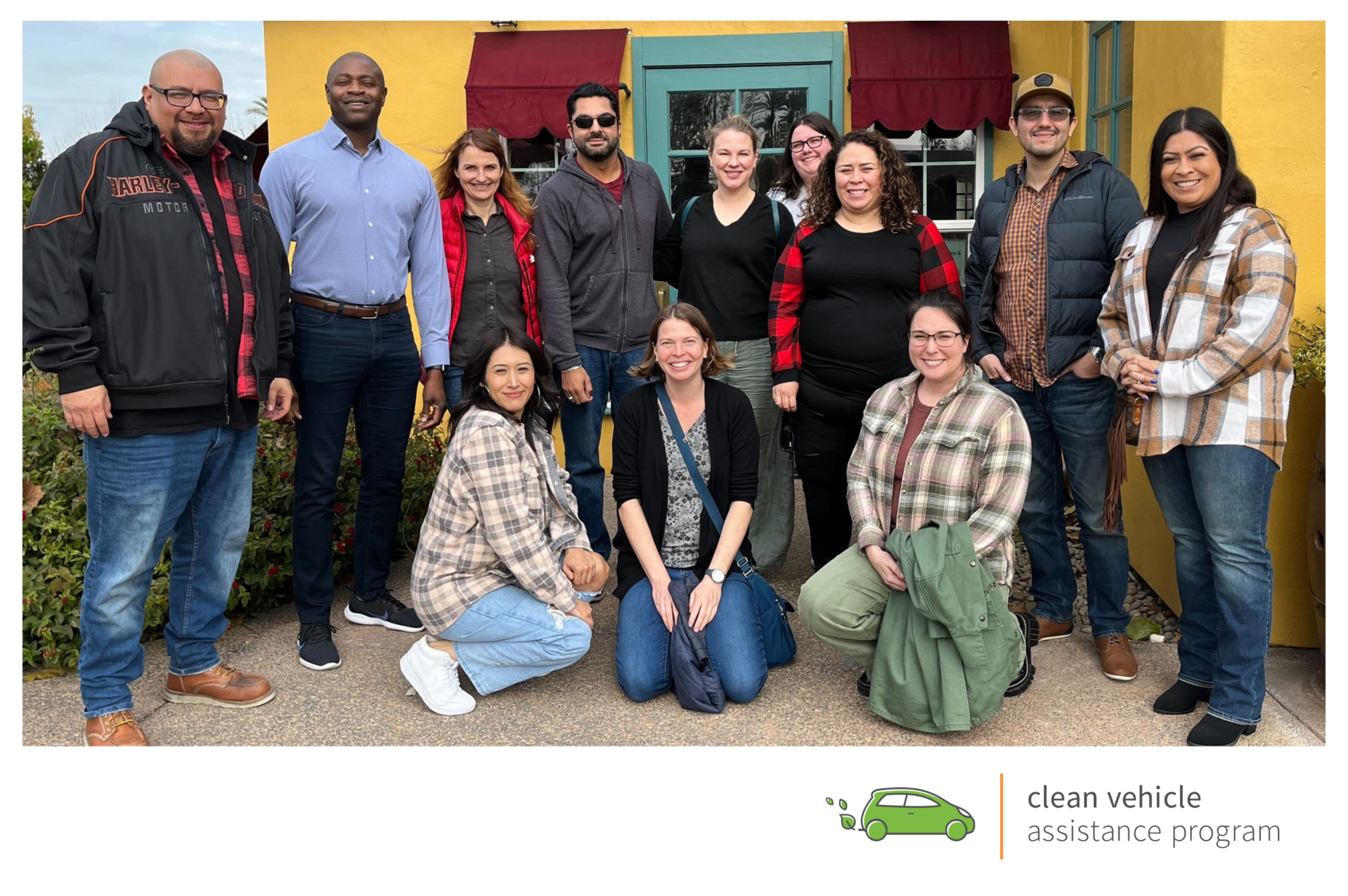
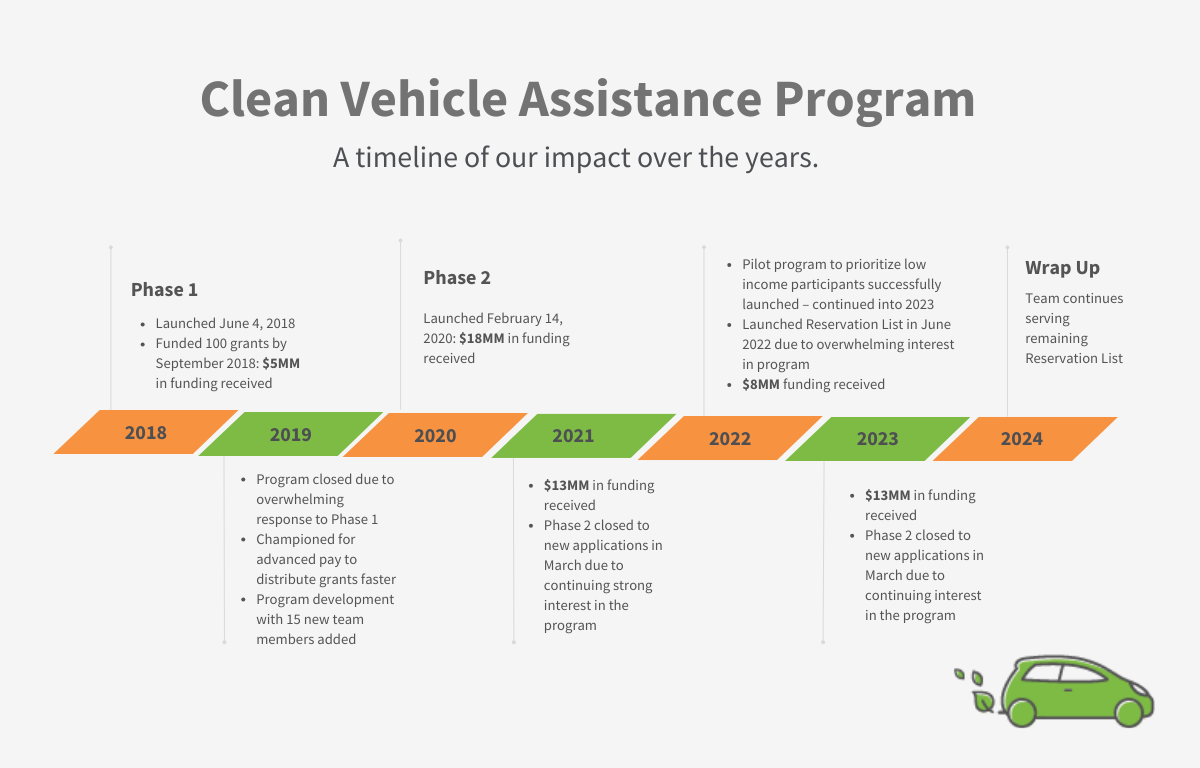
The Clean Vehicle Assistance Program (CVAP) was launched in June of 2018 to make environmentally friendly vehicles accessible and affordable to Californians. Over the last six years, the program has provided grants and affordable financing to help income-qualified Californians purchase or lease a new or used plug-in hybrid, fuel cell, or electric vehicle.
Beneficial State Foundation served as contract administrator, with Beneficial State Bank providing non-predatory auto loans capped at 8% interest. The California Air Resources Board (CARB) funded CVAP as part of California Climate Investments to help reduce greenhouse gas emissions, strengthen the economy, and improve public health and the environment—particularly in disadvantaged communities (DACs).
CVAP Impact
Over the course of its operation, the program received 34,827 applications from qualified individuals. From 2018 to 2024, our team funded 5,016 vehicle grants, totaling over $25 million, distributed on a first-come, first-served basis. Additionally, we established partnerships with over 450 new and used car dealerships across local, regional, and state levels.
By November 2023, CVAP had funded $5,825,270 in charging station solutions including:
- Issuing 389 Charge Cards for easier access to public charging
- Providing 1,749 Charge Cards and Portable EV Chargers, blending convenience with mobility
- Installing 883 EV Chargers, expanding the network of accessible charging stations
- Adding 113 Portable EV Chargers, offering flexibility and ease for EV owners on the go
 The program covered all of California, but the top five counties served were:
- Los Angeles (30%, 1,483 grantees)
- Orange (14%, 703 grantees)
- San Diego (9%, 435 grantees)
- Riverside (6%, 315 grantees)
- San Bernardino (5%, 260 grantees)
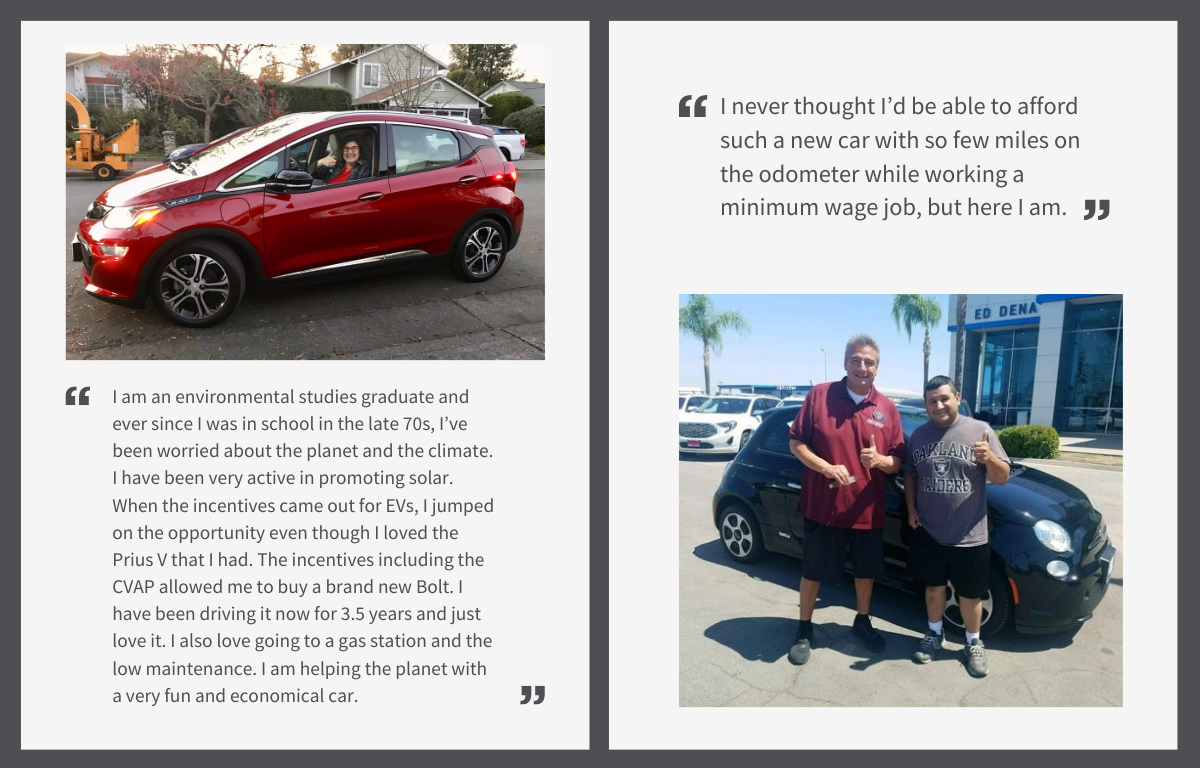
What CVAP Taught Us About Mission-Driven Banking
CVAP wasn’t just a successful clean transportation program; it offered clear lessons about what’s possible when banking is designed around real community needs.
- Mission-driven banks can deliver complex public programs at scale: As a CDFI, Beneficial State Bank demonstrated the operational discipline required to administer a statewide initiative, offering fair auto loans that conventional lenders routinely deny to low-income borrowers, regardless of credit score.
- Alternative underwriting works in practice: CVAP showed that risk-appropriate pricing does not require predatory terms. Working-class Californians were able to access reliable transportation without exploitation — an approach we continue to advance across the broader banking system.
- A just transition requires financial innovation: Climate policies like those which incentivize EV adoption can’t succeed without financial institutions willing to design products that reflect the realities of working-class households. CVAP illustrated how mission-aligned banks fill gaps left by traditional lenders.
Adapting in Real Time Improved Outcomes
Like many large public programs, the Clean Vehicle Assistance Program faced structural challenges from the outset. Early on, unpredictable state funding led to frequent application closures, and the California Air Resources Board required a first-come, first-served model rather than the needs-based approach we consistently recommended.
In response, Beneficial State Foundation and Beneficial State Bank implemented targeted, data-driven adjustments. In late 2023 and early 2024, we held firm on competitive 8% interest rates amid a high-rate environment, launched cost-effective geo-fenced social media outreach in disadvantaged communities, and developed digital search strategies for working-class Californians seeking affordable vehicles.
These changes materially improved outcomes. Beneficial State Bank’s share of program loans grew from roughly 3% to the mid-30% range, alongside increased participation from the communities the program was intended to reach. In its final year, CVAP operated much closer to its original equity goals.
Implications Beyond CVAP
The Clean Vehicle Assistance Program enabled Beneficial State Foundation to invest deeply in the well-being of California communities and the environment — pairing clean vehicle grants, charging infrastructure, and fair auto loans to help people thrive while advancing environmental and social justice. Just as importantly, CVAP showed what’s possible when public investment and mission-driven banking work together. The program’s achievements and the lessons learned along the way offer a roadmap for a just transition in which environmentally friendly vehicles and the financial tools that make them accessible are truly affordable for all.
Editorial note (February 2026): This post was updated to incorporate additional key insights and lessons learned. These updates highlight what CVAP demonstrates about the role of mission-driven financial institutions in advancing equitable climate solutions and a just transition.